Saturday, February 24, 2018

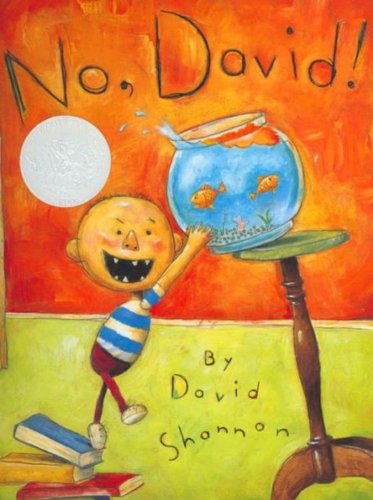
No, David! By David Shannon


Image result for No david
primary level


Genre- Realistic Fiction /Picturebook- The problem in the story is plausible and relatable for young children.

Illustrations- The colors used in the illustrations are vibrant colors to appeal to young readers. The text are wriiten in large letters to add emphasis to the words. The illustrations itself tells a story for young readers.
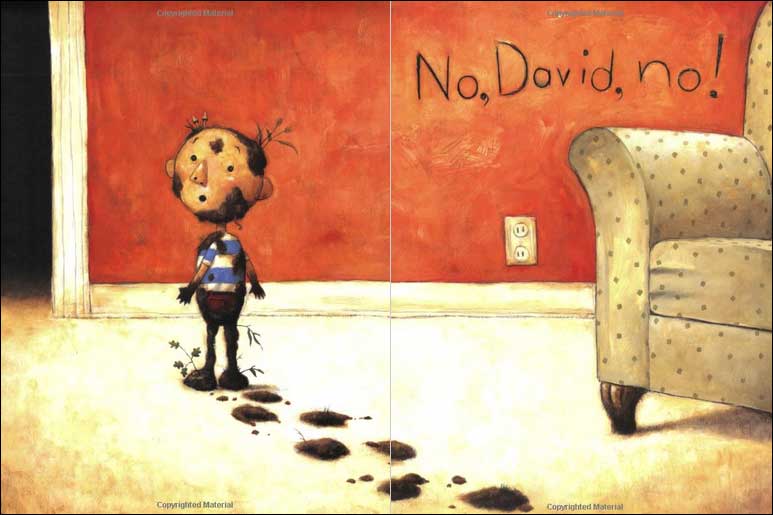
Image result for No david

Summary - The book is about a young boy named David who can't seem to stay out of trouble. The behaviors reflect a typical curious child who is learning that there are rules to follow.

Reader Response Questions- What was the problem in the story?
What are some of the things David did?
What were the consequences David had?

Connection Activities-  
1. The teacher can show the book to the class and read the title than ask students to inference what the book is about.
2. Shared reading- Reread the book and ask students to read their copies at the same time. Pause at each page to allow student sto study the illustrations. Ask what is goimng to happen next?

Personal Response- This would be a great book to use at the begining of the school year to read as a read aloud to help students understand the purpose for rules. The teacher and students can create class rules together. I am a huge fan of David Shannon books. The pictures are humorous and remind me of my children were they were going through the "No" stage.
Image result for No david


References

Galda, L., Cullinan, B. E., & Sipe, L. R. (2010). Literature and the child. Belmont, CA: Wadsworth/Cengage Learning.

Shannon, D. (2014). No, David!New York: Blue Sky Press.

The Lorax By Dr. Seuss

The Lorax By Dr. Suess
primary level
 
Image result for the lorax book pictures


Genre/ Fantasy- The book's theme of the misuse of natural resources is consistent with the logical world.

Summary-  A little boy is curious when he comes across the The Street of the Lifted LORAX. The Once-ler tells the boy he will tell him for a price. The boy pays him and the Once-ler begins to tell him how the the Lorax was lifted away. The text uses ryhming and made up words to engage children.

Illustrations-  The dark colored illustrations paint a dark gloomy convey a message of how the misuse of natural resources have harmful effects. The bright colored images reflect how the home of the Lorax once was before the Once-ler set up his shop destoyed the home of the Lorax and many others.

Image result for the lorax book pictures


Reader Response Questions- What was the land like before the Once-ler arrived?
Did it seem like someplace you would like to live?
What parts of your own environment would you be sad to see go?

Connecting Activities 
1. Ask students to dicusss the following questions using the Think-Pair-Share method.
The The Once-ler said " I biggerered my money which everyone needs." Is it true everyone needs money?
Is it right to make a lot of money while destroying the earth?
 What are some ways humans pollute the earth?
2. Students can rewrite an alternative ending to the Lorax. Students can include how humans are mindful and use natural resources properly.

Personal Response- The author Dr. Suess style of rhyming and made up words not only engages readers but also conveys a powerful message how humans are destroying the earth. "Unless someone like you cares a whole lot, nothing is going to get better. It's not." (2017)


references 
Galda, L., Cullinan, B. E., & Sipe, L. R. (2010). Literature and the child. Belmont, CA: Wadsworth/Cengage Learning.

S. (2017). The Lorax. London: HarperCollins Childrens Books.


Sunday, February 18, 2018

Who was Anne Frank? By Ann Abramson

Book - Who Was Anne Frank? by Ann Abramson
Who Was Anne Frank By Ann Abramson
level/intermediate 

Genre: Multicultural/Biography The text uses illustrations and descriptive words to give the reader an authentic vision of what is what it was like to live during the Holocaust.

Illustrations: Black and white sketched drawings of diagrams and maps are provided to explain the chronicle order of Hitler was taking over and causing people to relocate if possible. 


Summary- Anne Frank is well known for her diaries that told her story during the Holocaust. Who was Anne Frank before the diaries?  The book gives the reader an insight into what happened before the family went into hiding and after they were discovered. The book is easy to read and appropriate for children. The book provides a timeline of Anne Frank's life. 

Reader Response Questions 
What do you think the purpose of the book is?
What questions do have for the author?
How would you describe the main character?

Activity Connections- Students can create a timeline of Anne Frank's life based on their knowledge of the text. 

Students can make a poster to include the main characters in the book. They can draw a picture or print one out, and students should include a crucial fact of the character. 

Personal Response- The book is easy to read for young children to understand the life of Anne Frank. I feel that the cartoonish pictures diminish the true feelings of devastation and sadness of her life and others. The story of Anne Frank was not a pretty picture and did not have a fairytale ending original illustrations or realistic drawings would have been a better choice to depict an accurate visual. 


References 
Abramson, A., & Harrison, N. (2017). Who was Anne Frank?New York, NY: Scholastic Inc.

Galda, L., Cullinan, B. E., & Sipe, L. R. (2010). Literature and the child. Wadsworth/Cengage Learning.


Forbidden SchoolHouse: The True Dramatic Story of Prudence Crandall and Her Students By Suzanne Jurmain


Forbidden Schoolhouse: The True and Dramatic Story of Prudence Crandall and Her Students


    Forbidden Schoolhouse: The True Dramatic Story of Prudence Crandall and Her Students By    Suzanne Jurmain
Intermediate level


Genre/nonfiction- The book describes accurate accounts of the retaliation towards Prudence Crandall and her students when she opened a school for African Americans girls.

Illustration: The cover uses a black and white photograph of the school to reflect the time era. The house in the photo appears to be out of focus causing you to look closely to the details of the house.

Summary: In 1832 Prudence Crandall a schoolteacher admitted an African American female to her boarding school which upsets the white community in Canterbury, Connecticut. When she is urged  to expel the girl and refuses the community uses extreme tactics to make their message clear. Prudence decides to open her school to African American females and goes against the status quo.

Reader Response Questions
What is the most important thing the author wanted you to learn about the book?
How can you use what you learned in your own life?

Connection Activities- 
  Have students complete a graphic organizer to answer Who, What, When, Where, How, and Why questions followed with a summary of the book.

Have students write a letter to the author with questions and responses they have to his/her writing.

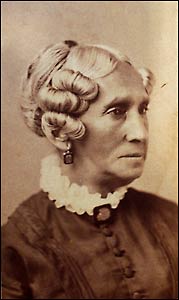
Personal Response- The author's writing style gives the reader a glimpse of what is was like to live in the 1830's. The illustrations play a huge role in the setting of the story. They paint a realistic image of the people and events mentioned in the text. The photo of Sarah Harris the first black student symbolizes an important message to stand up for what you believe in.

Sarah Harris Fayerweather


References
Galda, L., Cullinan, B. E., & Sipe, L. R. (2010). Literature and the child. Belmont, CA: Wadsworth/Cengage Learning.

Jurmain, S. (2005). The forbidden schoolhouse: the true and dramatic story of Prudence Crandall and her students.Carmel, CA: Hampton-Brown.
 
Sarah Harris [Digital image]. (n.d.). Retrieved February 14, 2018, from https://connecticuthistory.org/prudence-crandall-fights-for-equal-access-to-education/


Wednesday, February 7, 2018

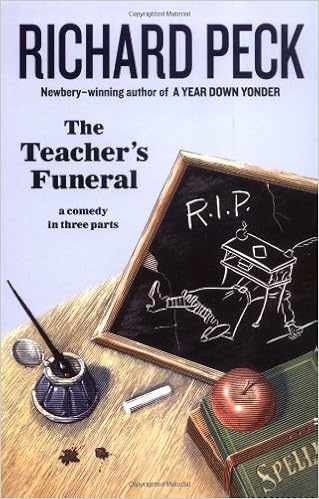
The Teacher's Funeral By Richard Peck


 The Teacher's Funeral
intermediate level

 Genre: Historical Fiction: The story portrays a historic setting with fictional characters and events that could have occurred in a the past.The text uses language to depict the historical time.

Book cover illustration- Light colors are used to make the cover appear old. The background is a light blue to draw the reader to focus on the title and the funny illustration.

 The story takes place in the early 1900's in rural Indiana. The main character Russell, dislikes school and wants nothing more than to leave Indiana especially after his teacher dies and his sister Tansy is the new teacher. Tansy has to learn how to leave the sibling rivalry at home and still deal with her brothers defiant behavior.


 Reader Response Questions In which does the events take place? Where is the setting?
What is the Case Special and why is it so important for Russell to see it every year?

Connection Activities- Historical Fiction vs Historical Nonfiction- students have to list what defines the genre.

Select other historical fiction books and have students compare the themes.


Personal Response- When I first started reading the The Teacher's Funeral it reminded me of the episodes from Little House in the Prairie. The setting and language was similar to The Teacher's Funeral. When the setting was at the schoolhouse I imagined the schoolhouse from the Little House on the Prairie. The humor was instantly identifiable in the opening line "If you teacher has to die August isn't a bad time of year for it." (Peck, 2004)

Image result for The teacher's funeral opening line

references 
Galda, L., Cullinan, B. E., & Sipe, L. R. (2010). Literature and the child. Belmont, CA: Wadsworth/Cengage Learning.


Peck, R. (2004). Libby (Dial ed.). Retrieved February 7, 2018.

The Teacher"s Funeral [Digital image]. (n.d.). Retrieved February 7, 2018, from ps://www.amazon.com/Teachers-Funeral-Richard-Peck/dp/0142405078

The Teacher's Funeral [Digital image]. (n.d.). Retrieved February 7, 2018, from ttps://www.weareteachers.com/21-of-the-best-opening-lines-in-childrens-books/

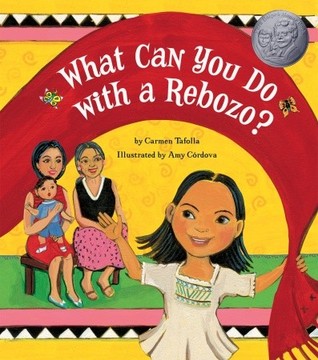
What Can You Do with a Rebozo? By Carmen Tafolla

What Can You Do with A Rebozo?
Primary level
Image result for What can you do with a rebozo


Genre: Multicultural/Fiction - The picturebook uses the art in the picture to tell a story that reflects the Mexican culture. The characters are believable and is set in the real world.


Illustrations- The vibrant colors evoke feelings of happiness and security that comes with loved ones. The lines give the illustrations a dimensional look to resemble real people and objects.
  Image result for What can you do with a rebozo


 The multicultural story tells a the significance a rebozo has to the Mexican heritage. A rebozo is a Mexican shawl worn by Latina women in various ways. The robozo is symbolization of Mexican identity.

Reader Response Questions- What is the silliest thing you can do with a rebozo?
What is the most practical?
Does anyone have a robozo, or know someone who has a robozo?

Activity Connections-
Students can create a picture story about them and their family. They must pick one item that is important to their family heritage. Each page needs to have one or two sentences to support the story.


The students can use a graphic organizer to answer following question
What was the story about?
Why do you think the author wrote the book?
How do you feel when you see the illustrations?


Personal Response- The author Carmen Tafolla is a Mexican-American poet who lives in my city, San Antonio. She is a poet, writer, teacher, educational consultant and is internationally known for her work. Her writing respectfully and accurately depicts the Mexican heritage.

References

Galda, L., Cullinan, B. E., & Sipe, L. R. (2010). Literature and the child. Belmont, CA: Wadsworth/Cengage Learning.

Tafolla, C., Córdova, A., Hernández, A., & Tafolla, C. (2009). What can you do with a rebozo? Berkeley: Tricycle Press.

Texas Archival Resources Online [Advertisement]. (n.d.). Retrieved February 7, 2018, from https://legacy.lib.utexas.edu/taro/utlac/00258/lac-00258.html

What Can You Do with a Rebozo? [Digital image]. (n.d.). Retrieved February 7, 2018, from https://www.juniorlibraryguild.com/books/view/9781582462707

Saturday, February 3, 2018

The Girl Who Could Fly By Victoria Forester

The Girl Who Could Fly
intermediate level


Image result for The Girl who could fly


 Genre Science Fiction: The book text allows the reader to envision the scientific possibility to fly.

Illustrations The book cover style provides a dark, gloomy, and mysterious mood. The characters on the cover portray an imaginative world where people can fly and escape danger.

The book setting at first a country life setting in 1860's and later tuns into a X-men superhero setting. The main character is a girl named Piper who has the ability to fly. When others find out about her gift she is sent to I.N.S.A.N.E. a school with other children who also have usual gifts. Here she is faced with trials of choosing right from wrong.

Reader Response Questions 
What distinguishes science fiction from other genres?
What elements does science fiction have in common with other genres?

Connection Activities
 Have students read a small portion of the book and ask to students to write a prediction of the book.
Another activity to have group discussion on the chapters and the theme of the book. If students don't agree the teacher could prompt questions to lead further discussion.

Personal Response Science Fiction is not a genre that interest me very much. I enjoyed the book due to the combination of setting. It made the book more appealing to me.


References 
 Forester, V. (2010). The girl who could fly. New York, NY: Scholastic.

Galda, L., Cullinan, B. E., & Sipe, L. R. (2010). Literature and the child. Belmont, CA: Wadsworth/Cengage Learning.

 The Girl Who Could Fly [Digital image]. (n.d.). Retrieved from https://sidbookreviews.wordpress.com/2014/09/28/the-girl-who-could-fly/


No, David! By David Shannon

primary level Genre- Realistic Fiction /Picturebook- The problem in the story is plausible and relatable for young children. Illustra...